That cold won't quit by week three. The paper cut that takes ten days to close instead of three. The infection that shows up again right after you finally beat it. If this sounds familiar and you've already ruled out bad luck, it may be worth asking your doctor about secondary immunodeficiency.
Unlike primary immunodeficiency, which is an inherited genetic condition present from birth,
secondary immunodeficiency is acquired. It develops later in life, usually because of an underlying illness, a medical treatment, or a nutritional gap that leaves the immune system unable to keep up. Because the cause is external rather than genetic, secondary immunodeficiency is often manageable, and in many cases the underlying issue can be treated directly.
This guide covers what secondary immunodeficiency is, its causes, the symptoms to watch for, and how treatments like IVIG therapy can help you get your immune system back on track
What Is Secondary Immunodeficiency?
Your immune system is built to recognize and fight off bacteria, viruses, and other invaders before they make you sick. Immunodeficiency is what happens when that system can't keep up: infections take hold more easily, last longer, and come back more often than they should.
Immunodeficiency falls into two categories, and the distinction matters for treatment.
Primary immunodeficiency (PID) is a genetic condition. Something in the development of the immune system didn't form correctly, and the person is born with the vulnerability. It's rare.
Secondary immunodeficiency (SID) develops later in life due to an external cause, such as an infection, a disease, a medication, or a nutritional deficiency, that weakens the immune system. Medical literature consistently describes secondary immunodeficiency as far more common than primary immunodeficiency, since many common illnesses and treatments can trigger it.
The rest of this guide focuses on secondary immunodeficiency: what causes it, how to recognize it, and what treatment looks like.
What Causes Secondary Immunodeficiency
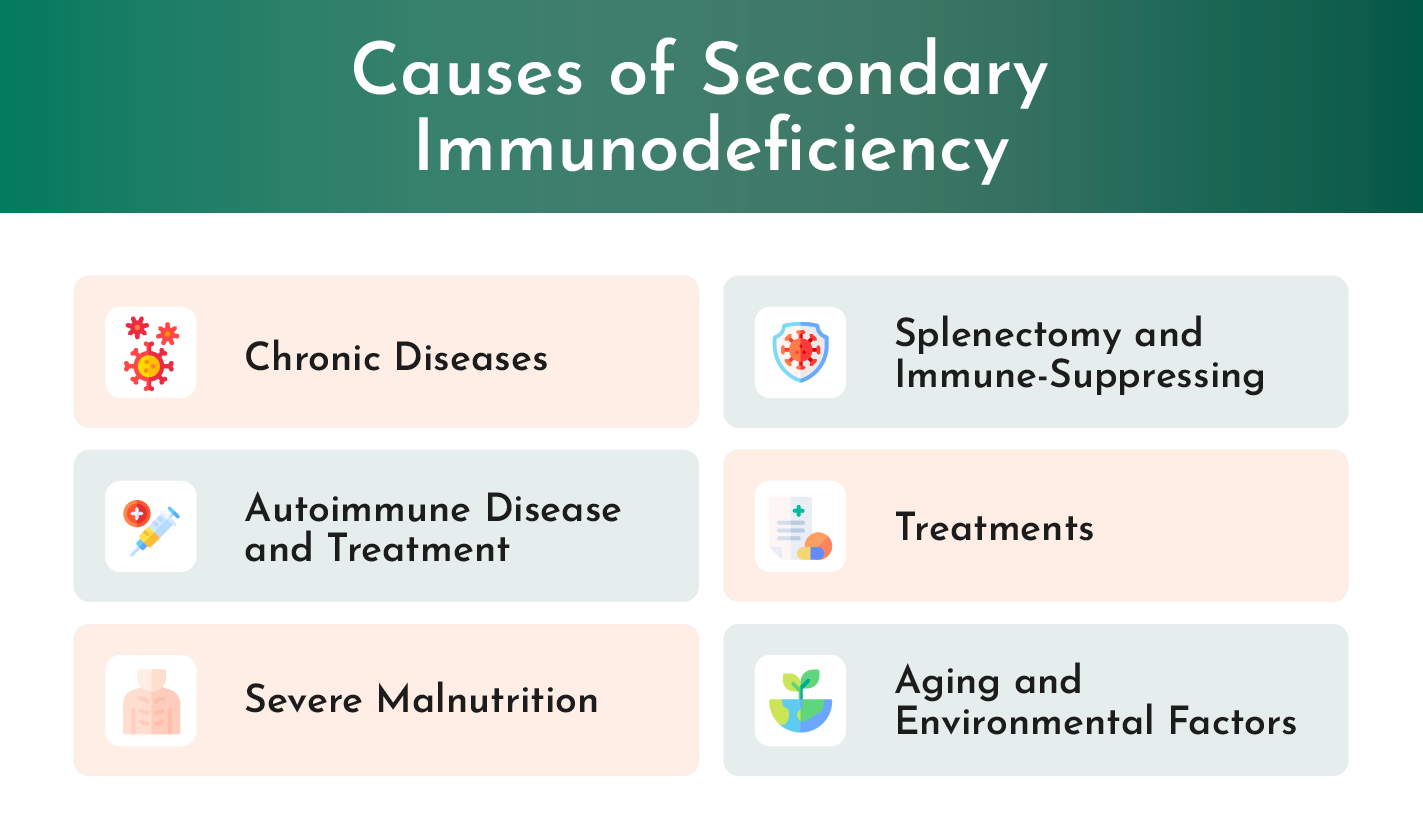
Secondary immunodeficiency usually traces back to one of four sources: a chronic disease, an autoimmune condition and its treatment, malnutrition, or a medical procedure that suppresses immune function.
Chronic diseases
Several long-term conditions interfere directly with immune function.
HIV attacks the white blood cells the immune system depends on to fight infection. According to the CDC,
37,981 people aged 13 and older were diagnosed with HIV in the United States in 2022, making it one of the most common drivers of secondary immunodeficiency.
Leukemia causes the body to overproduce abnormal white blood cells that can't do their job, and these cells gradually crowd out healthy immune cells. Lymphoma affects the lymphatic system itself, the network immune cells travel through, which can interfere with antibody production. Multiple myeloma damages plasma cells, the cells that produce antibodies, leaving patients more vulnerable to infections such as pneumonia.
Type 2 diabetes, when blood sugar runs high for extended periods, alters immune function directly, which is part of why wounds heal slowly, and skin or urinary infections recur in people with advanced diabetes. Chronic kidney disease and liver cirrhosis, both of which often show few symptoms in their early stages, can also progress to the point of suppressing the immune response.
Autoimmune disease and its treatment
Autoimmune conditions involve an overactive immune system, but they contribute to secondary immunodeficiency in two ways: the disease process damages healthy tissue, and the immunosuppressant medications used to control it also reduce the body's ability to fight infection. Hence, choose the
right infusion center in San Antonio for appropriate guidance.
Severe malnutrition
Producing enough immune cells and antibodies requires adequate nutrition. When the body doesn't get what it needs, whether due to poverty, an eating disorder, or another underlying illness, immune function drops.
Splenectomy and other immune-suppressing treatments
The spleen filters bacteria out of the bloodstream, so surgical removal (sometimes necessary to treat blood disorders) leaves patients more susceptible to infection. The same is true of immunosuppressive drugs used in organ transplants, chemotherapy, and other treatments designed to suppress the immune system.
Aging and environmental factors
Immune strength naturally declines with age. Chronic stress, poor sleep, and ongoing exposure to toxins add to that decline over time.
Signs Your Immune System May Be Struggling
A few patterns and
warning signs of immunodeficiency that are worth paying attention to:
- Frequent infections. Multiple colds, coughs, or viral infections within a single year.
- Slow healing. Infections or wounds that should clear in three to five days instead take weeks.
- Unusual vulnerability. Getting sick from pathogens that don't typically affect healthy people, like recurrent oral thrush.
None of these, on their own, means you have secondary immunodeficiency. But if the pattern sounds like last year, it's worth bringing up with a doctor.
How Secondary Immunodeficiency Is Diagnosed
Diagnosis typically starts with basic lab work, such as a
complete blood count or urinalysis, to look for signs that the immune system isn't functioning normally. From there, your doctor can order more targeted testing based on those results.
How Secondary Immunodeficiency Is Treated
Treatment generally works on two fronts at once: reducing your exposure to infection while rebuilding your immune defenses.
Intravenous immunoglobulin (IVIG) therapy is one of the most established treatments for this. It's an infusion that delivers antibodies from healthy donor plasma directly into a patient's bloodstream, giving the immune system a stronger baseline to fight from. Many patients see a meaningful reduction in how often they get sick once treatment begins, though results vary by individual and underlying cause.
What This Means for You
Secondary immunodeficiency is acquired, not inherited, which means the underlying cause can often be identified and treated. Frequent infections and slow healing aren't something to just push through. They're signals worth investigating.
If this sounds like what you've been dealing with, schedule a consultation with Apex Allergy and Asthma in San Antonio to get evaluated and discuss whether IVIG therapy is right for you.
Frequently Asked Questions
IVIG has a long track record and is generally considered safe, though your doctor will confirm it's appropriate for your specific situation before starting treatment.
How do I know if I have secondary immunodeficiency?
There's no way to self-diagnose it. A doctor can order blood tests and other tests to assess how your immune system is functioning and determine whether secondary immunodeficiency is the cause.
Do I have to take IVIG forever?
Not necessarily. If the underlying cause can be treated effectively, then short-term treatment plans typically last around 12 weeks; longer-term treatment can last 3 to 5 years, depending on the specific condition.