For most people, catching a cold two or three times a year is an inconvenience. For someone living with an immunodeficiency disorder, it can mean weeks of difficult symptoms, multiple rounds of antibiotics, and, in serious cases,
hospitalization. The immune system is supposed to be the body’s first line of defense, and when it can’t do that job, everyday life becomes considerably harder.
That’s exactly the problem that IVIG infusion therapy is designed to address. Intravenous immunoglobulin (IVIG) is a treatment that delivers concentrated antibodies directly into the bloodstream, effectively lending the immune system what it’s missing. It’s been used for decades, backed by strong clinical evidence, and for the right patients, it can be genuinely life-changing.
If you’ve recently been diagnosed with a primary or secondary immunodeficiency, or if your doctor has mentioned IVIG treatment as a potential option, this guide is meant to answer the questions most patients have before their first infusion, and a few they wish they’d asked sooner.
Frequent infections and a weak immune system?
What Is IVIG Therapy?
IVIG therapy stands for intravenous immunoglobulin therapy. In practice, it involves infusing a concentrated preparation of immunoglobulin antibodies (primarily IgG) into the body through a vein. These antibodies are pooled from the
donated plasma of thousands of healthy individuals, so each dose provides protection against a wide range of pathogens and infectious agents.
Think of it this way. Your immune system normally produces its own antibodies to recognize and neutralize harmful invaders. When that system is compromised, whether due to a genetic condition, an autoimmune disorder, or a side effect of treatments like chemotherapy, the body doesn’t generate enough of these protective proteins on its own. Intravenous immunoglobulin treatment steps in to fill that gap.
IVIG has been in clinical use since the
early 1980s and is FDA-approved for several specific conditions. It’s one of the most established therapies in immunology. While it isn’t a cure for the underlying condition, it significantly strengthens the immune system’s ability to fight off infections and handle illness. It’s also distinct from a blood transfusion: rather than receiving whole blood, patients receive a purified antibody preparation derived from donated plasma.
How Does IVIG Infusion Therapy Work?
Understanding how IVIG works starts with how it is administered and managed during treatment. Here is the breakdown of the process;
1. Infusion into the bloodstream
IVIG is administered through an IV line placed in a vein, usually in the arm. The antibodies enter the bloodstream and begin circulating immediately.
2. Immune system support or modulation
- Primary immunodeficiency: Replaces missing or insufficient IgG antibodies.
- Autoimmune conditions: Modulates the immune system to reduce harmful overactivity, as seen in conditions like dermatomyositis and immune thrombocytopenic purpura.
3. Personalized dosing
Dosage is based on body weight and the condition being treated.
- Typical range: 400–600 mg/kg for immunoglobulin replacement; 1-2 g/kg for treatment doses
- Frequency: Every 3–4 weeks (adjusted based on clinical response and lab values)
4. Monitored administration
A trained nurse oversees the infusion, adjusting the rate as needed to ensure patient comfort and manage any early signs of reaction.
Conditions Treated with IVIG Therapy
Immunoglobulin therapy is primarily prescribed for primary immunodeficiency disorders, such as Common Variable Immunodeficiency (CVID) and X-linked agammaglobulinemia, providing lifelong treatment that allows for a manageable life. It is also effective for secondary immunodeficiencies (see our
immunodeficiency services page for a full overview) resulting from conditions such as chemotherapy or long-term immunosuppression.
IVIG is
FDA-approved for conditions beyond immunodeficiency, including Kawasaki disease, Guillain-Barré syndrome, CIDP, and immune thrombocytopenic purpura (ITP). Its off-label use for conditions like rheumatoid arthritis requires careful evaluation. In allergy and immunology practices, IVIG is primarily used for patients with documented immunodeficiency experiencing frequent, uncontrolled infections.
Benefits of IVIG Treatment
The IVIG benefits patients experience go well beyond fewer sick days, though that’s certainly a meaningful one. Here’s what the treatment can realistically achieve.
The most immediate benefit is a
reduction in the frequency and severity of infections. Patients who previously cycled through antibiotics every few weeks often find their infection rate drops significantly after starting regular infusions. Fewer infections means fewer emergency room visits, fewer missed workdays, and a real, noticeable improvement in daily energy and quality of life.
IVIG also provides broad coverage. Because the antibodies come from a large, diverse donor pool, each preparation contains immunity against hundreds of different pathogens. That breadth is difficult to replicate through any other treatment approach.
The benefits of infusion therapy extend to patients with autoimmune overlap as well. For individuals managing both an immunodeficiency and an inflammatory condition, IVIG can address both simultaneously through its combined supplementing and modulating effects on the immune system.
It’s also generally compatible with other treatments. IVIG doesn’t require stopping other medications, and in many cases, it’s used as part of a broader management plan that includes preventive antibiotics, vaccinations, and regular evaluation with an immunologist. If uncontrolled environmental allergies are contributing to immune system strain, addressing those concurrently often produces better outcomes overall.
How to Prepare for an IVIG Infusion Treatment
Preparing for your first IVIG infusion is straightforward. There’s typically no special diet or fasting required; you can eat normally and take your usual medications. Staying well-hydrated in the days before the infusion can help with vein accessibility and reduce headaches, a common mild reaction.
Some providers suggest taking acetaminophen and an antihistamine about 30 to 60 minutes beforehand to lower the chance of reactions, especially in early sessions. Plan for several hours of sitting still, and bring something to do, like a book or music, to help pass the time.
What to Expect During an IVIG Infusion Treatment
On the day of your infusion, a nurse will insert the IV line and start the infusion at a slow, cautious rate. This gradual start is intentional: it lets your body adjust to the antibody preparation and helps identify any early reactions before the rate is advanced.
The IVIG treatment process follows a consistent pattern. The rate is gradually increased over the first 30 to 45 minutes. If you’re tolerating it well (no flushing, headache, or pressure symptoms), the nurse advances to the target infusion speed and maintains it for the duration of the session.
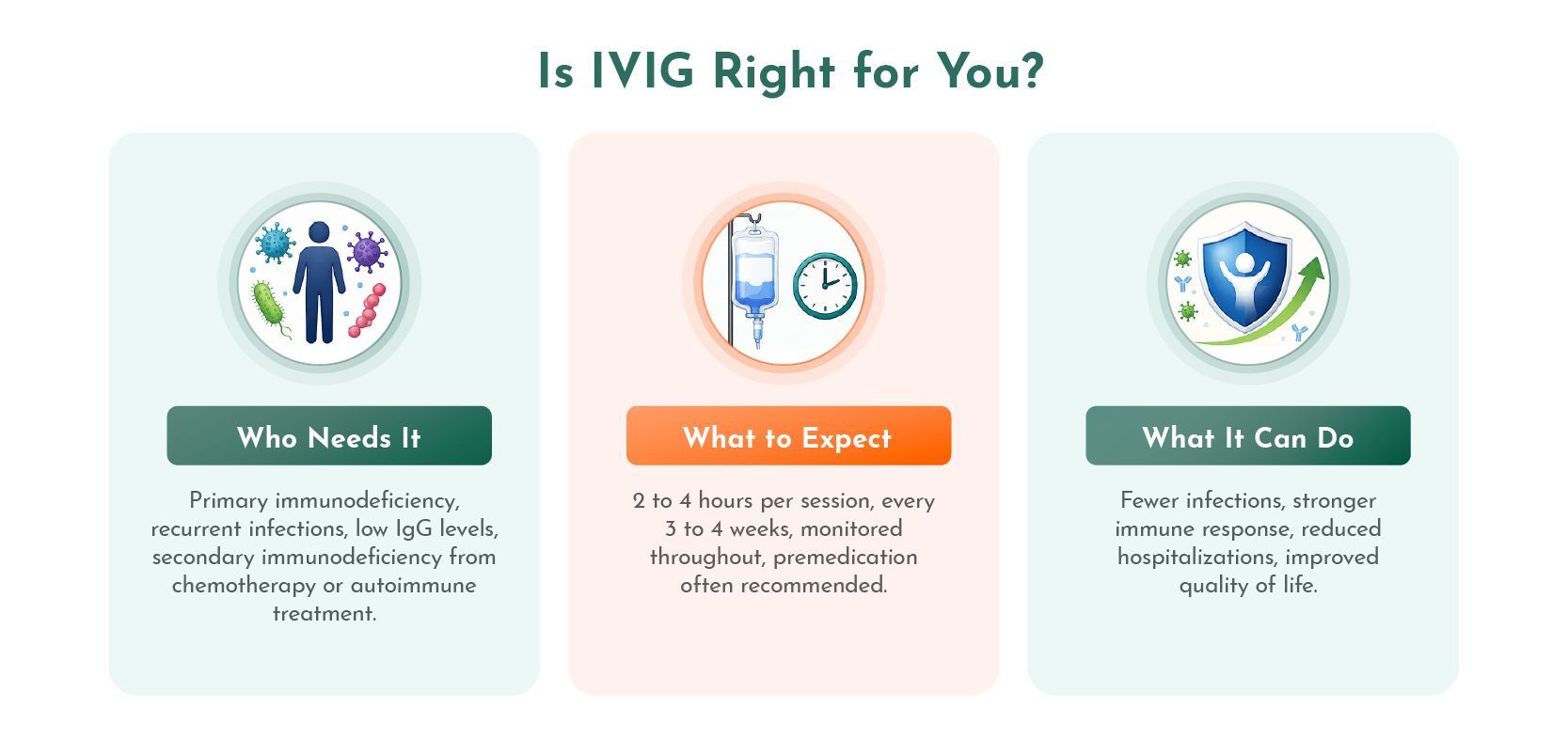
So how long does an IVIG infusion take? Most sessions last between two and four hours, though the actual time depends on the dose, the specific product being used, and your individual tolerance. Patients receiving higher doses or those who’ve had past reactions may have longer sessions. Your provider will give you a realistic time estimate before your appointment so you can plan your day accordingly.
Vital signs, including blood pressure and heart rate, are monitored throughout the infusion. You should feel comfortable speaking up at any point if something doesn’t feel right, whether it’s a building headache, a sensation of pressure in the chest, or unusual dizziness. The clinical team can pause the infusion or adjust the rate immediately based on your feedback.
IVIG Side Effects and Safety: Is IVIG Therapy Safe?
IVIG therapy is generally safe, with an excellent safety record over four decades.
Mild IVIG side effects like headache, fatigue, and nausea may occur during or within 24 hours of the infusion but are often mitigated by adjusting the infusion rate or premedicating. Serious reactions are rare, affecting fewer than 5% of patients, and are typically associated with specific risk factors, such as aseptic meningitis.
Patients with documented IgA deficiency should notify their provider before initiating IVIG, as this group is at
higher risk of anaphylactic reactions to preparations containing trace IgA.
The donated plasma used to produce IVIG is rigorously screened and processed. Manufacturing includes multiple pathogen-inactivation steps, which makes transmission of bloodborne infections through IVIG extremely rare in modern, regulated products.
The treatment is considered compatible with pregnancy, and dose adjustments can be made for patients with renal concerns or other complicating conditions.
Who Needs IVIG Therapy and When Is It Recommended?
IVIG therapy is typically reserved for specific medical conditions where antibody support is clinically necessary. A thorough evaluation helps determine whether a patient is an appropriate candidate for intravenous immunoglobulin therapy.
Primary Immunodeficiency
The most common candidates are patients with primary immunodeficiency who have low IgG levels and frequent or severe infections. This may include recurrent pneumonia, persistent sinus infections, or infections caused by unusual organisms.
Secondary Immune Suppression
IVIG may also be recommended for patients with weakened immune systems due to treatment. This includes individuals undergoing certain cancer therapies, organ transplant recipients on immunosuppressants, or those with clinically low antibody levels.
Evaluation and Testing
Eligibility is confirmed through blood tests (IgG, IgA, IgM), assessment of vaccine response, and infection history. In some cases, allergy testing or further evaluation is needed, especially when conditions like asthma and immune dysfunction overlap.
Cost of IVIG Therapy and Insurance Coverage
How much does IVIG Therapy cost?
IVIG treatment cost varies widely based on dosage, treatment frequency, product type, and infusion setting. Hospital infusion centers, dedicated clinics, and home infusion services each have different pricing structures. Without insurance, a single treatment cycle can range from several thousand to tens of thousands of dollars, making cost an important consideration before starting therapy.
Is IVIG covered by insurance?
IVIG is generally covered by insurance when used for FDA-approved conditions, especially primary immunodeficiency. Most commercial insurers, as well as Medicare and Medicaid, provide coverage when medical necessity is clearly documented. Approval depends on detailed records, including lab results, infection history, and physician justification for treatment. Some initial claims may be denied but are often overturned through appeal with proper documentation. Working with a specialty clinic experienced in prior authorizations can help streamline this process and reduce administrative burden for patients.
Recovery and Aftercare After IVIG Infusion Treatment
Recovery from an IVIG infusion is usually smooth, with most patients able to drive home afterward unless sedating premedication was given. Within 24 to 48 hours post-infusion, common side effects include fatigue and, occasionally, a mild headache. Staying hydrated, resting, and avoiding strenuous activities on infusion day are recommended. Over-the-counter pain relievers can help with headaches, and your provider can suggest the best option based on your medications.
Some patients feel better within days as antibody levels rise, while others notice improvement gradually over several cycles. Any serious symptoms, such as a severe headache, chest tightness, significant rash, or breathing difficulties, should be reported to your provider promptly.
New IVIG Infusion Suite Now Open in San Antonio at Apex Clinic
Apex Allergy & Asthma is pleased to offer IVIG infusion services at our Highway 281 (San Pedro) location. We understand how significant this treatment is for patients who have spent months or years managing frequent illness with limited answers, and we’ve designed our infusion suite to be as comfortable and efficient as possible. Clean, calm, and staffed by experienced clinical professionals, it’s a setting where patients can settle in for their session without added stress.
Our team includes a board-certified immunologist in San Antonio who oversees the full arc of patient care: evaluation, dosing decisions, insurance navigation, and ongoing monitoring. Every step happens within the same practice, so nothing is lost between referrals or fragmented across providers or specialty pharmacies. Our Nurse Practitioner, who will be directly managing your infusions, has over ten years of infusion experience with IVIG, chemotherapy, and other IV medications.
If you’ve been diagnosed with an immunodeficiency, if your doctor has recommended IVIG, or if you’re simply dealing with more frequent illness than seems right and haven’t had a thorough immune workup, we’d encourage you to come in for an evaluation. Searching for IVIG infusion centers near me will lead you to our 281 clinic at 14615 San Pedro Ave, where you’ll find the same standard of care as always.
Strengthen your immune system with IVIG Therapy
Frequently Asked Questions
How long does an IVIG infusion take?
Most IVIG infusion sessions last between two and four hours, though the exact duration depends on the dose, the specific product used, and how well you tolerate the infusion rate. First infusions are often on the longer side because the rate is advanced more cautiously. Subsequent sessions tend to move faster as your provider gains confidence in your tolerance.
Is IVIG covered by insurance?
For FDA-approved indications such as primary immunodeficiency, IVIG treatment is typically covered by major commercial insurers, Medicare, and Medicaid, provided the medical necessity is well documented. Prior authorization is usually required. Our team at Apex works directly with patients to prepare the documentation and navigate the authorization process.
Who is a good candidate for IVIG therapy?
Candidates for IVIG therapy typically include patients with diagnosed primary immunodeficiency (such as CVID or hypogammaglobulinemia), those with secondary immunodeficiency from cancer treatment or immunosuppressive drugs, and patients with certain autoimmune conditions that have an FDA-approved IVIG indication. An immune workup with a specialist is the best way to determine whether IVIG is appropriate for a specific patient.
Can I eat and take my medications before my IVIG infusion?
Yes. In most cases, there is no fasting requirement for IVIG treatment. You can eat normally and take your usual medications on infusion day. Staying well hydrated beforehand is encouraged. If your provider has recommended specific premedication, that should be taken about 30 to 60 minutes before arriving for your session.