Eczema affects
31.6 million people in the USA, and it can range from a "mildly annoying dry patch" to "actively ruining my sleep and my week." It can be a pretty pesky skin condition.
Fortunately, identifying the underlying causes of your eczema flare-ups makes controlling the condition significantly more manageable.
Apex Allergy and Asthma has spent years helping San Antonio patients understand what's going on in their bodies and build a plan that works for them. Together, we can find a solution for your allergies and help you get proper eczema treatment.
But what exactly is eczema? Is it a normal rash? Or something else?
What Is Eczema?
Eczema, or atopic dermatitis, is a chronic skin condition characterized by inflammation, dryness, and itching. It's not contagious. You can't catch it, and you can't give it to anyone else.
Imagine your healthy skin working like a brick wall. It
locks moisture in and keeps irritants, allergens, and bacteria out. If you have eczema, that wall has gaps. So the moisture slips out, irritants slip in, and your immune system reacts. This kicks off the itch-scratch cycle that makes eczema so frustrating.
Eczema often shows up in childhood, but it can appear at any age, and for many people it's a lifelong companion that flares up and calms down depending on what's going on around (and inside) them.
What Causes Eczema?
Although medical research hasn't identified a single definitive cause for eczema,
three primary drivers play a key role in its development.
Genetics
Eczema tends to run in families, often alongside asthma and seasonal allergies
Your immune system
In eczema-prone skin, the immune system overreacts to minor triggers, releasing inflammatory chemicals that cause redness, swelling, and itching.
Your environment
Harsh soaps, temperature swings, allergens, and stress can set off an eczema flare-up, even when your genes and immune system haven't changed.
This is why "just use this cream" often isn't a great solution. Proper eczema treatment usually means repairing the skin barrier, calming the immune response, and managing triggers.
Eczema Symptoms: What to Look For on Your Skin
Eczema shows up differently from person to person. You may wonder, ‘What does eczema look like?’
Well, you can look out for the
following signs.
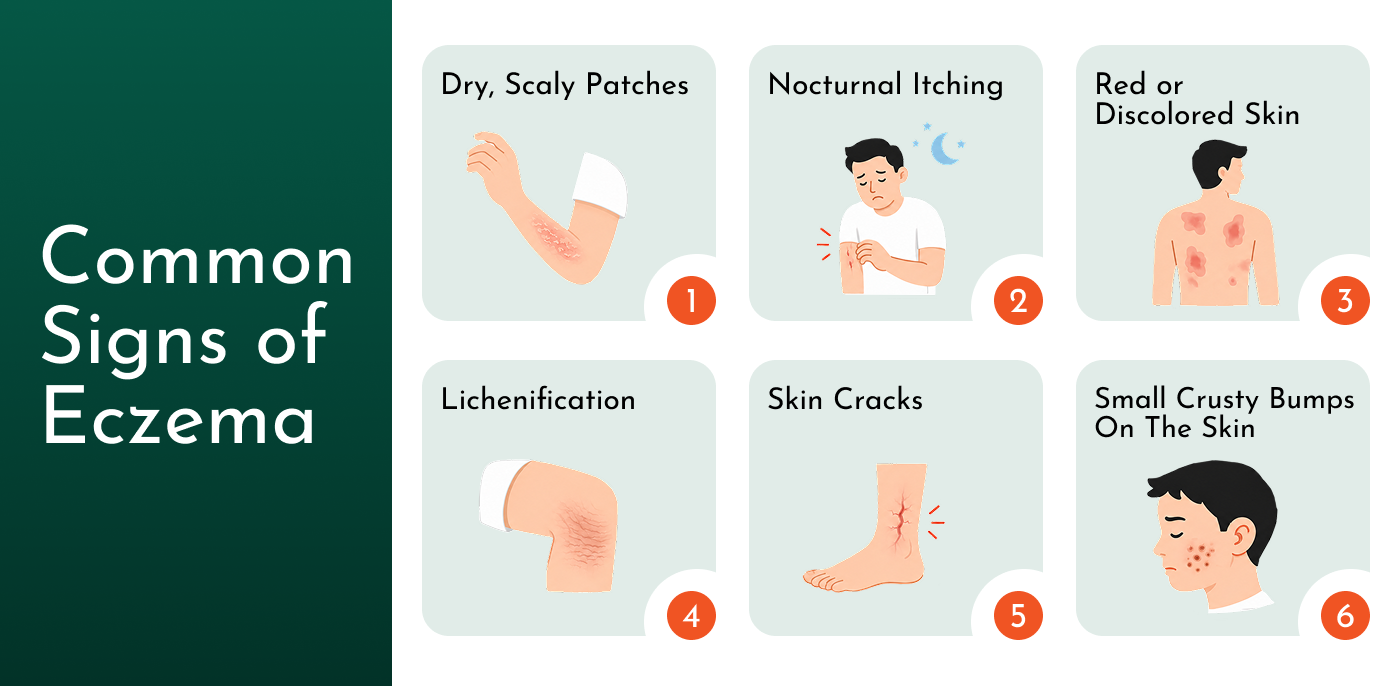
- Dry, scaly patches that feel rough or leathery
- Itching that somehow always gets worse at night
- Red or discolored skin
- Small bumps that ooze or crust over when scratched
- Thickened skin in spots you scratch a lot
- Cracked, sensitive skin, especially on hands, elbows, knees, and face
How can you tell if it is just a rash or eczema?
Read here to learn.
Some people deal with light dryness; others get widespread, painful flare-ups. There's no one "normal." Each patient fights their own eczema symptoms.
Types of Eczema
Eczema is really an umbrella term for several related conditions.
- Atopic dermatitis: The most common type; it usually begins in childhood and is often associated with allergies and
asthma.
- Contact dermatitis: Occurs after contact with an irritant or allergen, such as certain metals, fragrances, or chemicals.
- Dyshidrotic eczema: Characterized by small, intensely itchy blisters, usually on the hands and feet.
- Nummular eczema: Coin-shaped patches of irritated skin are a symptom.
- Seborrheic dermatitis: Hits oily areas like the scalp and face, causing flaking and redness
- Stasis dermatitis: Affects the lower legs, usually linked to poor circulation, common in older adults
Knowing which one you're dealing with helps you understand the condition better, because eczema treatment isn't usually one-size-fits-all.
What Could Set Off a Flare-Up?
Reasons for eczema flares can be
numerous and diverse. An eczema flare-up happens when something irritates an already fragile skin barrier or triggers the immune system. Usual suspects include:
- Irritants: Soaps, detergents, fragrances, and
scratchy fabrics
like wool can irritate your skin.
- Allergens: Dust mites, pet dander, pollen, certain foods, and other seasonal allergens can trigger an eczema flare-up.
- Weather extremes: Cold, dry air and hot, humid air can both be trouble.
- Sweat: Exercise or heat can irritate sensitive skin faster.
- Stress: Yes, your emotions really can show up on your skin
- Infections: Bacterial or viral infections can inflame skin that's already compromised.
If you live in San Antonio, your skin faces a very specific combination of triggers. San Antonio's long, hot summers mean prolonged exposure to sweat, a classic trigger for flares. Add in high humidity, and you've got conditions that build irritation throughout the day.
Grass pollen is another local troublemaker. South Texas has a long pollen season, and it can show up on your skin, too, along with your sinuses.
Then there's mold, which thrives in our humidity, both outdoors and in poorly ventilated indoor spaces.
If you're managing eczema here, keeping an eye on pollen counts, controlling indoor humidity, and rinsing off soon after sweating can cut down on how often you flare.
How Long Does an Eczema Flare-up Last?
A mild flare might clear up in a few days with consistent moisturizing and avoiding triggers. A bigger flare, one that goes untreated or keeps getting retriggered, can drag on for weeks.
If eczema is chronic and poorly managed, the skin can get stuck in a loop where it never fully resets between flares. Starting treatment early shortens the flare and lowers your risk of complications such as infection.
Apex Allergy and Asthma offers eczema treatment that suits you and your skin. Our healthcare providers have years of experience in treating such skin conditions.
Keeping Flares Away
Eczema isn't always curable, but the
right habits make a real difference in keeping the flares at bay:
- Moisturize daily, ideally right after showering, with fragrance-free creams or ointments
- Keep showers short and lukewarm instead of long and hot
- Figure out your personal triggers. It could be fabric, food, or seasonal allergens
- Manage indoor humidity if you're somewhere hot and damp
- Stick to gentle, fragrance-free products for skin and laundry
- Manage stress with routines, movement, or relaxation techniques that work for you
- Follow your treatment plan, including any prescribed topical or systemic medications
None of this works as a generic checklist forever, though. The best results usually come from a plan built around your specific triggers, ideally with a specialist's help. That is where Apex Allergy and Asthma comes in. Our eczema treatment helps you keep flares at bay for longer.
When Is It Time to See a Specialist
You should be booking an appointment if you notice the following symptoms:
- Basic skincare and moisturizing aren't helping the rashes
- Rashes are frequent, severe, or spreading
- You notice signs of infection, like fever
Apex Allergy and Asthma can bring in the bigger guns, prescription topicals,
allergy testing,
and newer systemic treatments. Also, working with someone local who understands San Antonio's pollen, heat, and mold patterns often yields better results than generic advice from the internet, which is why Apex Allergy and Asthma Clinic can help you more effectively than any online consultation.
FAQs
No cure yet, but plenty of people get long stretches of clear or well-controlled skin with the right management.
For some people, certain foods can trigger flares. It's different for everyone, so it's worth exploring with a healthcare provider rather than jumping into a broad elimination diet on your own.
Is eczema worse in summer or winter?
Eczema triggers are different for everyone. Some people flare up more in dry winter air; others flare up more in summer due to heat and sweat.
Can adults get eczema for the first time?
Yes. It often starts in childhood, but it can also appear for the first time in adulthood, usually triggered by stress, hormones, or new environmental exposures.