Your immune system is your body’s first line of defense against infections. But for people with primary immunodeficiency, this defense is weakened from birth, making even minor illnesses harder to fight. Primary immunodeficiency diseases (PIDD) are a
group of over 400 rare, chronic disorders that disrupt the immune system’s ability to function properly. Without early diagnosis and management, these conditions can lead to frequent, severe, or life-threatening infections.
If you or a loved one seems to get sick more often than others or struggles to recover from infections, it may be a sign of an underlying primary immunodeficiency. This guide breaks down what you need to know: from types and symptoms to diagnosis and treatment options, including how specialists at Apex Allergy & Asthma in San Antonio can help.
Think You or a Loved One Has an Immune Deficiency?
What Is Primary Immunodeficiency?
Primary immunodeficiency is a group of
genetic disorders in which part of the immune system is missing or doesn’t function as it should. Unlike secondary immunodeficiency, which is caused by external factors like infections, medications, or chronic diseases, primary immunodeficiency is present from birth, though symptoms may not appear until later in life.
These disorders can affect any part of the immune system, including:
- B cells, which produce antibodies to fight infections
- T cells, which help regulate the immune response
- Phagocytes, which ingest and destroy invaders
- Complement proteins, which assist in killing bacteria and viruses
Without a fully functional immune system, the body struggles to fend off bacteria, viruses, fungi, and other pathogens, leading to recurrent or persistent infections.
Types of Primary Immunodeficiency
Causes of Primary Immunodeficiency
Primary immunodeficiency is almost always
caused by genetic mutations. These mutations can be:
- Inherited: Passed down from one or both parents (e.g., X-linked agammaglobulinemia is carried on the X chromosome, so it primarily affects males).
- Sporadic: New mutations that occur randomly, with no family history.
In some cases, the genetic cause is unknown. However, researchers continue to identify new genes linked to these disorders, improving diagnosis and treatment options.
Signs and Symptoms of Primary Immunodeficiency
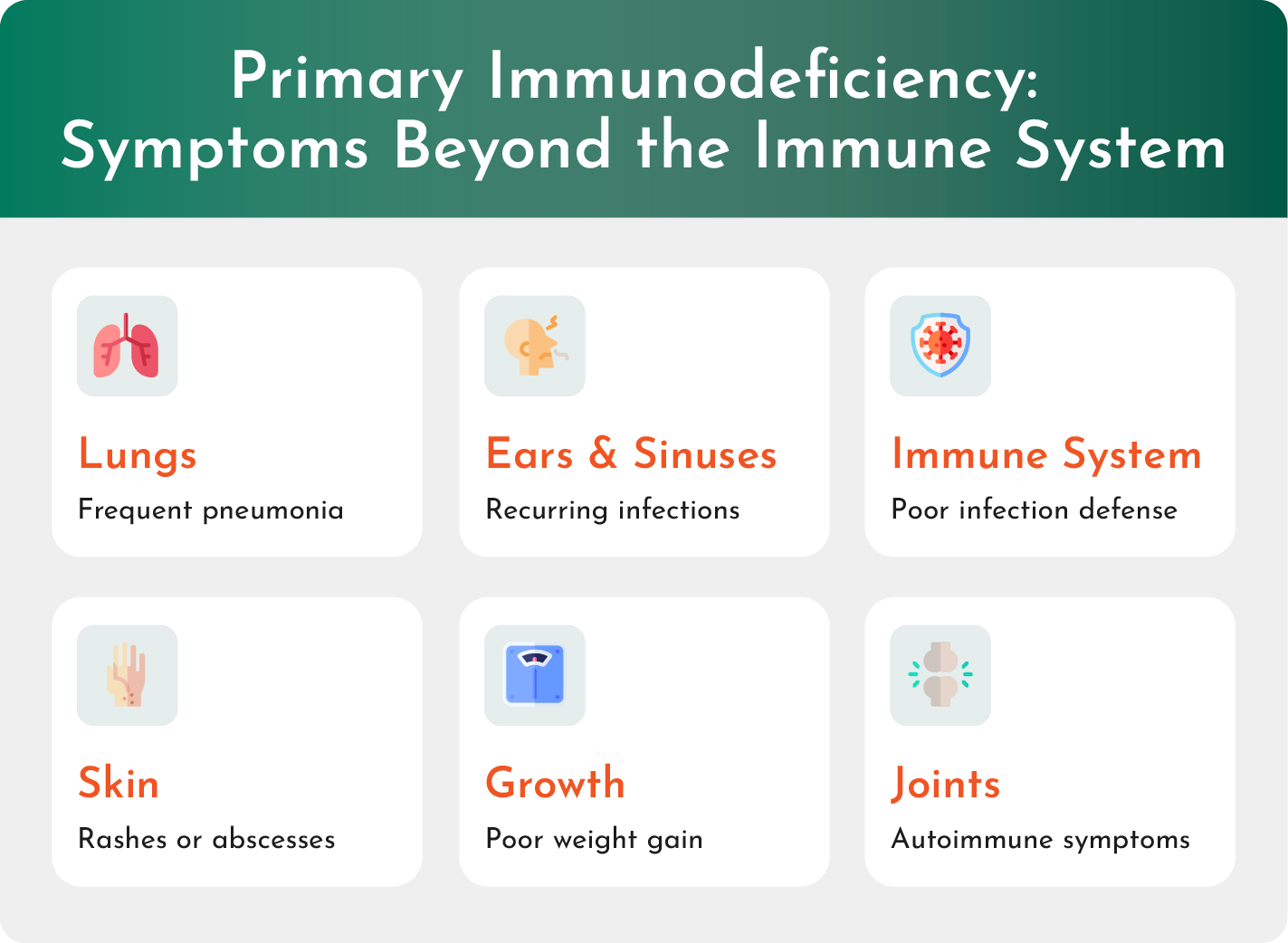
The signs of primary immunodeficiency can vary widely depending on the type and severity of the disorder. However, some
warning signs of primary immunodeficiency are red flags that warrant further evaluation:
- Frequent infections: Frequent, severe, recurrent, or unusually difficult-to-treat infections may indicate an underlying primary immunodeficiency.
- Slow recovery: Infections that take longer than usual to resolve.
- Unusual infections: Infections caused by opportunistic organisms (e.g., fungal infections, tuberculosis).
- Family history: A relative with a diagnosed primary immunodeficiency disease.
- Autoimmune issues: Conditions such as lupus, rheumatoid arthritis, or type 1 diabetes that can occur alongside PIDD.
- Poor growth or weight loss: In children, failure to thrive or gain weight as expected.
- Enlarged lymph nodes or spleen: Due to chronic infection or inflammation.
- Skin rashes or abscesses: Such as eczema, granulomas, or recurrent boils.
Note: Symptoms often appear in infancy or early childhood, but some primary immunodeficiency diseases may not be diagnosed until adulthood.
Examples of Primary Immunodeficiency Diseases
Here are some examples of primary immunodeficiency and their key features:
- Common Variable Immunodeficiency (CVID):
One of the most common primary immunodeficiency diseases, characterized by low antibody levels and increased susceptibility to bacterial infections.
- X-linked Agammaglobulinemia (XLA): Affects males almost exclusively, resulting in very low or absent antibody levels and frequent bacterial infections.
- Severe Combined Immunodeficiency (SCID): A life-threatening condition where both B and T cells are severely impaired. SCID is often diagnosed in infancy and requires urgent treatment, such as a stem cell transplant.
- Chronic Granulomatous Disease (CGD): Phagocytes cannot produce the chemicals needed to kill certain bacteria and fungi, leading to recurrent, severe infections.
- DiGeorge Syndrome: A primary immunodeficiency caused by a missing or underdeveloped thymus gland, leading to T cell deficiency.
- Selective IgA Deficiency: The
most common primary immunodeficiency, where the body lacks IgA antibodies but other immune functions are normal. Many people with this condition have no symptoms.
Diagnosing Primary Immunodeficiency
Early diagnosis of primary immunodeficiency is critical to prevent complications. The diagnostic process typically includes:
Medical History
Your doctor will ask about your history of infections, family history, and any other symptoms.
Physical Exam
A thorough exam to check for signs like enlarged lymph nodes, spleen, or skin abnormalities.
Lab Tests:
- Complete Blood Count (CBC): To check for low white blood cell counts.
- Immunoglobulin (Ig) Levels: To measure antibody levels (IgG, IgA, IgM, IgE).
- Vaccine Response Testing: To see if your body can produce antibodies after vaccination (e.g., pneumococcal or tetanus vaccines).
- Genetic Testing: To identify specific mutations linked to primary immunodeficiency diseases.
- Flow Cytometry: To analyze the types and numbers of immune cells.
Newborn Screening: In the United States,
SCID screening has been adopted by all states and is included in routine newborn screening programs.
Treatment for Primary Immunodeficiency
While there’s no cure for most primary immunodeficiency diseases, treatments can help manage symptoms, prevent infections, and improve quality of life. Primary immunodeficiency treatment options include:
1. Infections Prevention and Management
- Antibiotics: Prophylactic (preventive) antibiotics may be prescribed to reduce the risk of bacterial infections.
- Antivirals/Antifungals: Used to treat or prevent viral or fungal infections.
- Vaccinations: Staying up to date on vaccines (e.g., flu, pneumococcal, HPV) is critical. However, live vaccines (e.g., MMR, chickenpox) may be unsafe for some people with primary immunodeficiency.
2. Immunoglobulin (Ig) Therapy
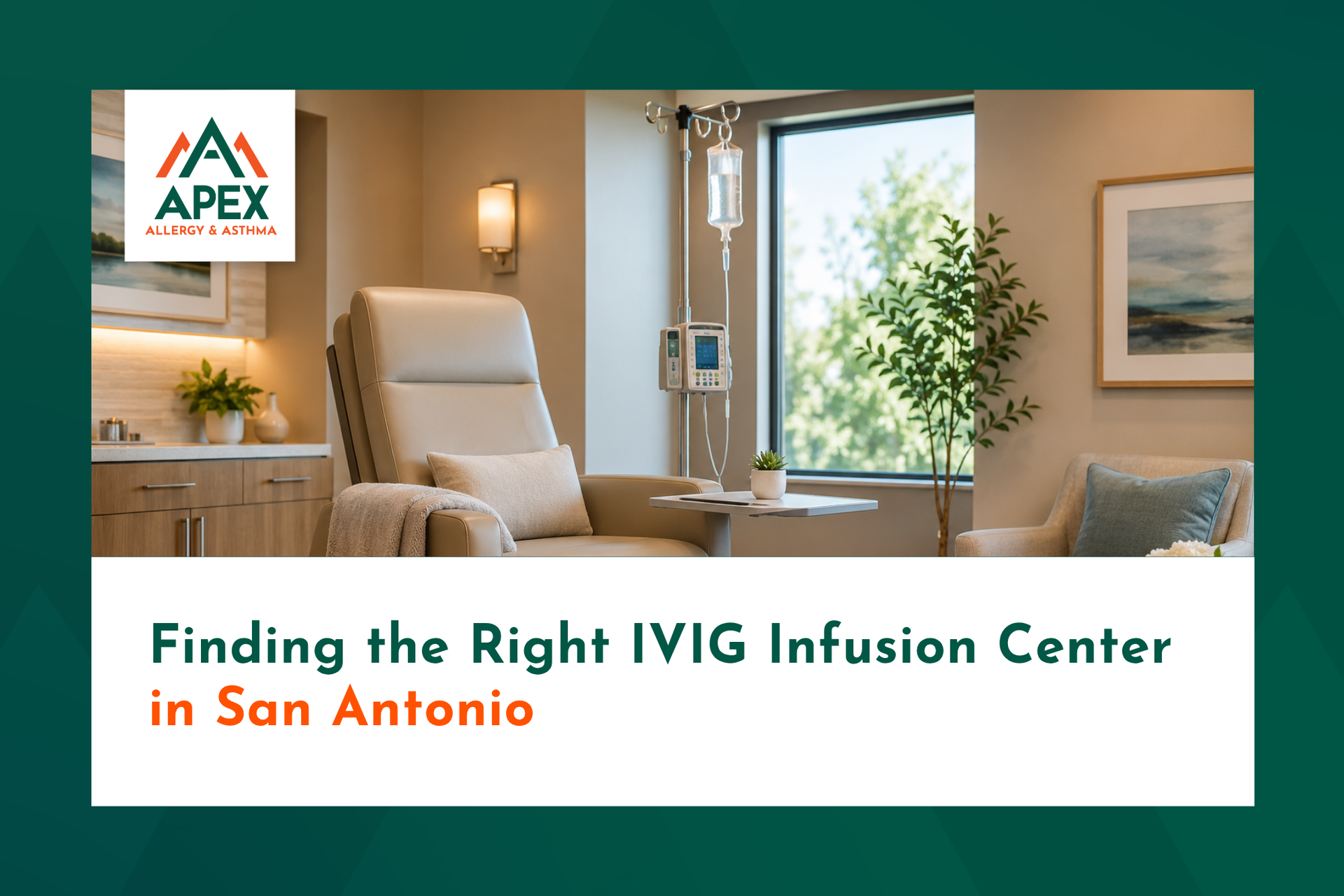
- Intravenous Immunoglobulin (IVIG): Infusions of antibodies from healthy donors, given every 3–4 weeks to boost the immune system. Apex Allergy & Asthma offers
IVIG infusion therapy in San Antonio.
- Subcutaneous Immunoglobulin (SCIG): Antibodies are injected under the skin weekly or biweekly, often at home.
3. Stem Cell Transplant
- For severe primary immunodeficiency diseases like SCID, a stem cell transplant can rebuild the immune system using healthy stem cells from a donor.
4. Gene Therapy
- An emerging treatment for primary immunodeficiency, gene therapy aims to correct the genetic defect causing the disorder. It’s currently available for some conditions, like SCID due to adenosine deaminase (ADA) deficiency.
5. Lifestyle and Supportive Care
- Hand Hygiene: Wash hands frequently to reduce exposure to germs.
- Safe Food Handling: Avoiding raw or undercooked foods to prevent foodborne illnesses.
- Avoiding Crowds: It is helpful, especially during cold and flu season or outbreaks of infectious diseases.
- Regular Follow-Ups: Ongoing monitoring with an immunologist or allergist to adjust treatments as needed.
When to See a Doctor in San Antonio
If you or your child experiences signs of primary immunodeficiency, such as frequent, severe, or unusual infections, it’s important to seek evaluation from a specialist. Apex Allergy & Asthma in San Antonio offers expert diagnosis and management for primary immunodeficiency diseases, including:
- Comprehensive immune system evaluations
- IVIG infusion therapy and other advanced treatments
- Personalized care plans to reduce infection risk and improve quality of life
Don’t wait for infections to become life-threatening. Early intervention can make a significant difference in long-term health outcomes.
Conclusion
Primary immunodeficiency can be a challenging and often overlooked condition, but with the right knowledge and support, it’s manageable. Recognizing the signs, understanding the types, and seeking early treatment for primary immunodeficiency can help you or your loved one lead a healthier, more active life. If you suspect an immune deficiency, don’t hesitate to reach out to a specialist. The team at Apex Allergy & Asthma in San Antonio is here to provide expert care and guidance tailored to your needs.
Take Control of Your Immune Health
Frequently Asked Questions
What is the most common primary immunodeficiency?
Selective IgA Deficiency is the most common primary immunodeficiency disease, affecting about 1 in 500 people. However, many individuals with this condition have no symptoms and may never be diagnosed.
How is primary immunodeficiency different from secondary immunodeficiency?
Primary immunodeficiency is genetic and present from birth, while secondary immunodeficiency is acquired later in life due to factors like infections (e.g., HIV), medications (e.g., chemotherapy), or chronic diseases (e.g., diabetes).
Are primary immunodeficiencies hereditary?
Many primary immunodeficiency diseases are inherited, but some can also result from spontaneous genetic mutations. If you have a family history of PIDD, your risk may be higher.
What should I avoid if I have primary immunodeficiency?
Avoid exposure to sick individuals, live vaccines (unless approved by your doctor), raw or undercooked foods, and crowded or unsanitary environments. Always follow your doctor’s recommendations for preventing infections.